 English (EUR)
 Česky (CZK)
 Deutsch (EUR)
 Polski (EUR)
 Français (EUR)
 Español (EUR)
 Italiano (EUR)
 Română (EUR)
 Ελληνικά (EUR)
 Dutch (EUR)
 Eesti keel (EUR)
 Português (EUR)
 Magyar (EUR)
 Svenska (EUR)
 Dansk (EUR)
 Suomen kieli (EUR)
 български език (EUR)
 Slovenščina (EUR)
 Slovensky (EUR)
 lietuvių kalba (EUR)
 latviešu valoda (EUR)
 Hrvatski (EUR)
How to increase libido in women and men? Rediscover the path to intimacy!

- What is libido?
- Loss of libido
- Tips for increasing libido
- Regular exercise and physical activity
- Getting enough sleep and rest
- Healthy diet and hydration
- Stress reduction and mental well-being
- Communication and intimacy in relationships
- Spice up your sex life and experiment
- Cut down on bad habits
- Address any health issues
- How to quickly increase libido in men?
- How to quickly increase libido in women?
- Conclusion
- FAQ: A lifeline in the jungle
What is libido?
Libido is a natural instinct that refers to sexual desire and the need for intimacy. But it's not just about sex — it's energy, desire, and an inner spark. Sometimes libido burns like a fire, other times it barely smoulders. But desire is not a matter of chance. At the core of it all is a delicate hormonal and neurochemical balance that determines whether the spark ignites within you 🔥.
Loss of libido
Loss of libido affects both men and women at different stages of life. It's not a shame, but it can be a call for change. What influences libido? ⬇️
These include hormone levels such as testosterone and oestrogen, brain chemistry (dopamine, oxytocin), but also stress, fatigue, mood, relationships and the environment in which you live. For example, prolactin increases after childbirth or during hormonal imbalance and acts as a natural brake on libido, as does cortisol (the stress hormone).
If a stressful situation does not improve over time, it can develop from a temporary state into a chronic one. For example, long-term stress at work can slowly and insidiously lead to a permanent decrease in libido. Therefore, if you notice that your sexual desire has been subdued for a long time and it is starting to bother you, it is not a good idea to wait for it to ‘pass on its own,’ but to take action.
And what is a ‘normal level of libido’? In the wild, there is no such thing. Some people want sex every day, others a few times a year, or not at all. That's perfectly fine; there is no norm.
It is also important to mention that sometimes it may not be a problem, as there are people who have an innate low or no libido (asexual orientation).
Tips for increasing libido
To boost your libido, it is often enough to adjust your lifestyle and improve your health. Sexual desire is closely related to physical condition and mental well-being, i.e. ‘a healthy body leads to a healthy sex life’ ⬇️.
Regular exercise
Physical activity improves blood circulation, hormonal balance and mood, all of which have a positive effect on your sex drive. Studies show that just 20-30 minutes of moderate exercise a day increases sexual interest 🏋️.
Get enough sleep and rest
It is during sleep that the body releases the largest amount of testosterone, the main fuel for libido 😴. But when rest is replaced by overwork, lights flashing late into the night and an inability to switch off, the body loses its strength and desire. Chronic lack of sleep exhausts the nervous system and weakens libido.
Try to sleep about 7–9 hours a day and actively fight chronic stress – it increases cortisol levels, which suppresses sex hormones.

Healthy diet and hydration
What you eat is not just a source of energy – it is the building block of your hormonal balance 🥗. A balanced diet full of high-quality protein, healthy fats, fresh fruit, vegetables and whole grains gives your body what it needs to naturally produce hormones such as testosterone.
Conversely, an excessively fatty or sugar-laden diet and obesity can lead to lower testosterone levels and thus lower libido.
Don't forget to drink enough fluids, as dehydration reduces the body's performance and causes fatigue and headaches.
Stress reduction and mental well-being
Stress and anxiety are among the most common predators of sexual desire – they quietly but persistently disrupt the ability to focus on the present moment, suppress the perception of erotic signals and flood the mind with thoughts that do not belong in the bedroom 🤔.
Consider what you really need to deal with yourself and what you can delegate or let go. Better organising your time and overworking yourself less means having more space for touch and intimacy. It is therefore important to set priorities and set aside time for rest.
Learn to switch off thoughts about work or worries for at least a few hours – go for a walk with your partner, listen to relaxing music, meditate or treat yourself to a massage. Because when the mind relaxes, the inner world opens up – the one where there is room for desire again.
Communication and intimacy
In a relationship where there is trust and attention, libido has fertile ground in which to grow.
Therefore, talk openly with your partner about your needs and fantasies, as well as any concerns or problems 💬.
Also work on being emotionally connected – a dinner together under the stars, a trip out of town, or an evening without phones is enough.
When affection, touch and trust are strengthened in a relationship, the body responds on its own. A tender gesture, a hug or a massage – all of these activate oxytocin, the hormone of closeness.
Spice things up and experiment in the bedroom
Sometimes, your libido falls asleep under the weight of routine, and that's when it's time to breathe new life into your relationship with new ideas and games 💞.
Try discovering together what can rekindle your passion – from sensual massages to role-play to new positions or erotic aids that will awaken your body and imagination.
According to experts, masturbation or watching erotic material can help stimulate inner images and revive the imagination. Many couples have also found success with so-called ‘sex dates’ – consciously planned time just for the two of you, when everything else is put aside and attention is focused on touch, closeness and excitement that grows with every minute.
Change your environment – enjoy a romantic weekend in the countryside or a night in an unfamiliar city. Even a small change in ritual or space can bring back the spark that previously bound you together. Passion loves surprises – and in the jungle of desire, you don't always follow the same path.
Limit bad habits
Smoking, excessive drinking of alcohol and drug use have a negative effect on sexual functioning ❌. Nicotine constricts blood vessels and can lower testosterone levels, while alcohol depresses the nervous system, resulting in reduced sensitivity and suppressed sexual responses.
Addressing health causes
Sometimes desire is not lost for no reason – it is just the body indicating something deeper that deserves attention.
If you suspect that your libido is related to medication or a health problem, consult your doctor. For example, some antidepressants, high blood pressure medications, or hormonal contraceptives can suppress desire as a side effect.
How to quickly increase libido in men?
If your desire is waning, try these few tips to quickly boost it:
- Strength training: just 20 minutes of exercise will increase testosterone and self-confidence.
- Quality sleep: get 7-9 hours of sleep, as most testosterone is produced at night.
- Zinc and vitamin D: supplement minerals that are important for hormonal balance.
- Natural supplements: maca, tribulus terrestris or L-arginine can increase sex drive.
- Reduce stress: breathe deeply, clear your mind, take a cold shower.
- Touch and closeness: tender contact and anticipation work wonders for libido.
How to quickly increase libido in women?
Try awakening your senses with these natural steps:
- Calm your mind: switch off stress (e.g. breathing exercises, meditation, massage).
- Sleep and relaxation: 7–9 hours of quality sleep restores energy and sex drive.
- Sensory stimuli: pleasant music, scents, touch – all of these can put you in the mood.
- Adaptogens: herbs such as ashwagandha harmonise the hormonal system.
- Exercise and blood circulation: light exercise (dancing, yoga) stimulates the body and desire.
- Open communication: talk to your partner about your needs and fantasies.
- Erotic impulses: try a sensual massage, exciting texts or visual stimulation.
Conclusion
Every body has its own rhythm and pace. Libido is not a race in which you have to perform. It is a feeling of connection with yourself, your partner, your body and your awareness of the present moment.
It is not about being constantly on alert, but about being attentive – to yourself, your needs and your relationship. Whether nature, sensual touch, yoga, open conversation or a change of routine inspires your libido, one thing is important: the desire is still there. You just have to give it a chance to breathe again ❤️.
FAQ: A lifeline in the jungle
To help you find your way in the wilderness, we've compiled answers to your most frequently asked questions on this topic ⬇️.
1. Is it normal to have a low libido?
Yes. Libido is variable and is influenced by hormones, the psyche, stress, life stages and relationships. There is no ‘normal level’ of desire; every body and soul has its own rhythm.
2. What supplements are available for men to increase libido?
Many men seek to increase their desire and performance with herbal supplements. The effects can vary and scientific evidence is not always conclusive, but there are substances that have been shown to have a positive effect on libido and sexual function.
- Maca (Peruvian cress, Lepidium meyenii): a root vegetable from the Peruvian Andes, traditionally used as an aphrodisiac. Research suggests that maca may increase sexual desire. A 2024 systematic review of studies reported that maca improved erections and overall sexual well-being in men. Smaller clinical trials have suggested that maca at a dose of around 3 g per day as opposed to placebo improved sexual desire and function in postmenopausal women as well.
- Ginseng (especially Korean red ginseng, Panax ginseng): A traditional Asian root, considered an adaptogen and tonic. Ginseng is probably the most studied herb in the field of sexual function, especially in men. Research suggests that ginseng does not increase testosterone levels, but directly improves sexual function. One study also reported that a combination of vitamin E and ginseng improved erections in men. Ginseng is a scientifically backed aphrodisiac for women as well, especially the mature and elderly.
- Ashwagandha (Withania somnifera): an Indian stress-reducing herb; there have been studies that ashwagandha improved sexual function and libido in men suffering from stress, and increased testosterone levels in infertile men.
- Butea superba: a traditional Thai herb that has been used for centuries as a natural aphrodisiac for men. One of the most important studies was published in the Asian Journal of Andrology in 2003. It was a three-month randomized, double-blind clinical trial that included Thai men aged 30 to 70 suffering from erectile dysfunction. The results showed that 4% of the patients experienced significant improvement in erectile function, with no significant changes in blood parameters or signs of toxicity.
- Damiana (Turnera diffusa): a traditional Central American aphrodisiac (contained in supplements such as ArginMax), but data are not yet available to confirm the efficacy of the herb's use alone.
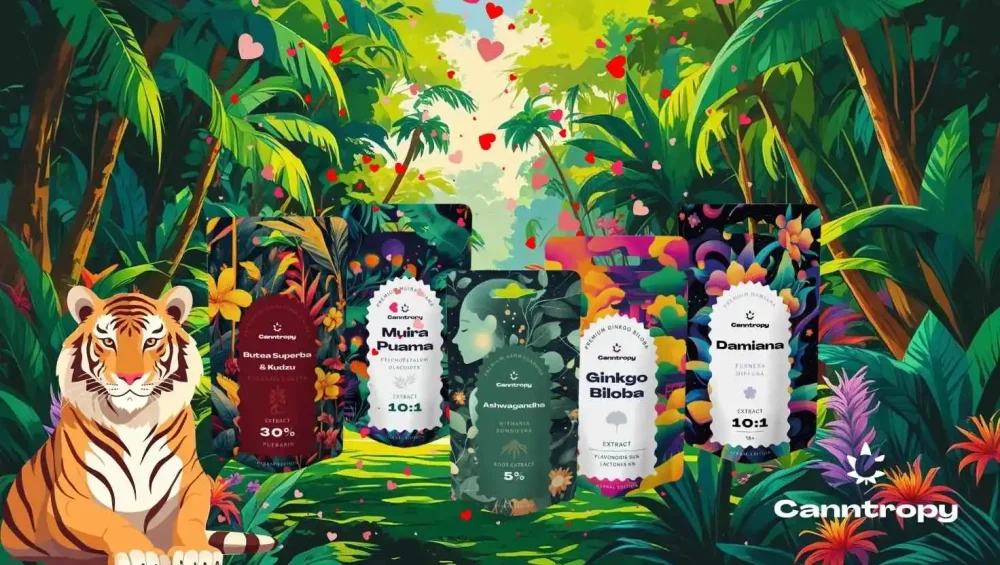
🌴 Canntropy tip ➡️: Try a natural dietary supplement for better sex – Cannor Tribargin Plus, which contains L-arginine, L-citrulline, tribulus terrestris, maca, ginkgo biloba, rhodiola, ginseng and L-arginine. Or try Euphoria Mushroom Libido Enhancing.
When using dietary supplements, have realistic expectations – they are not miracles, but they can be useful supportive agents.
3. What natural supplements are available to increase libido in women?
- Anchovy (Tribulus terrestris): It is one of the few supplements that is backed by studies aimed specifically at women with low libido. For example, a Brazilian study that examined women diagnosed with HSDD (Hypoactive Sexual Desire Disorder, known as low libido disorder) found that tribulus extract significantly improved sexual desire and satisfaction compared to placebo.
- Ashwagandha (Withania somnifera): a powerful adaptogen with effects on reducing stress, anxiety and exhaustion. Helps women regain sensitivity, desire for intimacy, and promote overall hormonal harmony. For example, in a 2021 clinical study, women taking ashwagandha showed increased libido, sexual satisfaction as well as more frequent arousal compared to placebo.
- Muira puama (Ptychopetalum olacoides): traditionally referred to as the "tree of potency," it may have a positive effect on female libido. In a study involving 202 healthy women with low sexual desire who took a daily combination of 175 mg of Muira puama extract and 16 mg of Ginkgo biloba, 65% experienced improvements in sexual desire, fantasies, ability to achieve orgasm and overall satisfaction with their sex life.
- Ginkgo biloba: Improves circulation and in a 1998 study was shown to be 84% effective in treating antidepressant-induced sexual dysfunction caused mainly by selective serotonin reuptake inhibitors (SSRIs). Women showed a higher rate of improvement (91%) compared to men (76%).
- Essential oils and aromatherapy: Although not a dietary supplement, the use of fragrances is worth mentioning for women. Rose, jasmine, ylang-ylang and sandalwood essential oils are known for their aphrodisiac effects in aromatherapy. These scents can help to relax you and increase your sensitivity to touch. Of course, this is not a proven medical effect, but it can be a complementary way (e.g. a diffuser in the bedroom with a few drops of jasmine while getting a massage together).
In women, herbal supplements can help mainly if they balance hormonal fluctuations or improve blood circulation or increase energy.
🌴 Canntropy tip ➡️: Try Hemnia products – Drop2Top - intimate oil with a vibrating effect, LubriCann - CBD intimate gel based on water and patches to boost libido.
4. What does treatment for low libido (in women and men) involve?
Treatment for low libido in men may include:
- Hormone therapy
- Testosterone replacement (injections, gels, patches) in cases of proven testosterone deficiency.
- Psychotherapy and sexological care
- Addressing psychological causes (anxiety, stress, relationship problems, pornography addiction).
- Sex therapy focused on restoring desire and reducing performance pressure.
- Specific medications
- There are no medications specifically designed to increase libido in men, but bupropion, for example, may help men with depression.
In women, treatment for low libido may include:
- Hormone therapy
- Estrogen treatment (especially topical) for vaginal dryness during menopause.
- Low doses of testosterone (off-label) in postmenopausal women with hypoactive sexual desire disorder (HSSD)
- DHEA (dehydroepiandrosterone) – a naturally occurring steroid hormone produced mainly in the adrenal glands. It is administered in the form of, for example, vaginal prasterone, which improves comfort during sexual intercourse, lubrication and mucosal sensitivity.
- Psychotherapy and sexological care
- Cognitive behavioural therapy (e.g. for negative attitudes towards sexuality).
- Couples therapy to address relationship and communication problems.
- Sex education, sensitive touch techniques and fantasy work.
- Specific medications
- Flibanserin (Addyi) – taken daily, increases desire by influencing neurotransmitters.
- Bremelanotide (Vyleesi) – injected as needed, temporarily increases sexual appetite.
Sources:
- mayoclinichealthsystem.org/hometown-health/speaking-of-health/lets-talk-low-libido
- my.clevelandclinic.org/health/diseases/15216-low-libido-low-sex-drive
- pubmed.ncbi.nlm.nih.gov
- pmc.ncbi.nlm.nih.gov/articles/PMC10910417
- healthline.com/nutrition/tribulus-terrestris
- webmd.com
- webmd.com/sex-relationships/features/the-truth-about-maca
- webmd.com/sexual-conditions/desire-disorder
- webmd.com/sex-relationships/features/loss-of-libido-in-men
- sciencedirect.com/science/article/abs/pii/S221295881930597X
- psychologytoday.com/us/blog/all-about-sex/202202/elders-sexual-function-improves-significantly-ginseng
- examine.com/research-feed/study/9D6av1/
- researchgate.net/publication/235729441_A_Prospective_Randomized_Double-Blind_Placebo-Controlled_Study_of_Safety_and_Efficacy_of_a_High-Concentration_Full-Spectrum_Extract_of_Ashwagandha_Root_in_Reducing_Stress_and_Anxiety_in_Adults
- tandfonline.com/doi/abs/10.1080/00926239808404927
- europepmc.org/article/MED/12937809
Author: Patricie Mikolášová
Photo: AI
"All information provided on this website, as well as information provided through this website, is for educational purposes only. None of the information contained herein is intended as a substitute for medical diagnosis and such information should not be considered medical advice or recommended treatment. This website does not promote, endorse or advocate the legal or illegal use of narcotic drugs or psychotropic substances or the commission of any other illegal activity. Please see our Disclaimer for further information."
Recommended products5
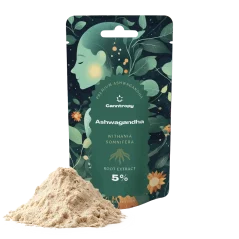

Canntropy Ashwagandha (Withania somnifera) Extract 5%, 5 g - 100 g
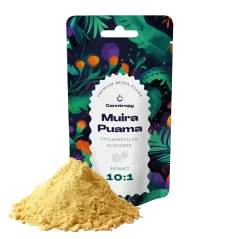

Canntropy Muira Puama (Ptychopetalum olacoides) Extract 10:1 , 5g - 100g
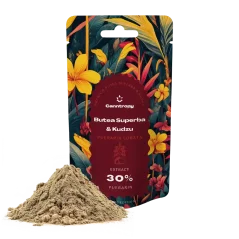

Canntropy Butea Superba and Kudzu (Pueraria lobata) Extract, 30 % Puerarin, 5 g - 100 g
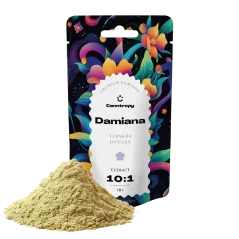

Canntropy Damiana (Turnera diffusa) Extract 10:1, 5 g - 100 g