 English (EUR)
 Česky (CZK)
 Deutsch (EUR)
 Polski (EUR)
 Français (EUR)
 Español (EUR)
 Italiano (EUR)
 Română (EUR)
 Ελληνικά (EUR)
 Dutch (EUR)
 Eesti keel (EUR)
 Português (EUR)
 Magyar (EUR)
 Svenska (EUR)
 Dansk (EUR)
 Suomen kieli (EUR)
 български език (EUR)
 Slovenščina (EUR)
 Slovensky (EUR)
 lietuvių kalba (EUR)
 latviešu valoda (EUR)
 Hrvatski (EUR)
Small marijuana? Discover Siberian motherwort
- A plant popular in the tundra and steppes
- In the footsteps of ancient healers
- The power in the green veins of marihuanilla
- Relaxation and sleep support
- Pain and inflammation relief
- Antibacterial effects
- Cardiovascular health
- Support for women's health
- Libido enhancement
- Other potential effects
- Possible side effects
- Traditional uses of Siberian motherwort
- End of expedition
- FAQ
A plant popular in the tundra and steppes
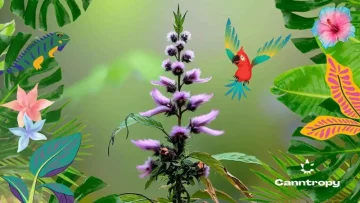
Siberian motherwort, Latin name Leonurus sibiricus, is an undemanding perennial herb from the Lamiaceae family, making it related to lemon balm and mint 🌿. It grows up to 1.5 metres tall, has a square stem, serrated oblong leaves and tiny purple flowers that form whorls around the stem 🌱.
As the name suggests, Siberian heartleaf originally comes from Asia, specifically southeastern Siberia, Mongolia and northeastern China 🌏. Thanks to trade, the plant has gradually spread to various corners of the world and has even become native to America.
In English, Siberian heartleaf is called honeyweed 🍯 because of its sweet aroma. South Americans refer to it as marihuanilla (little marijuana) in Spanish because of its renowned relaxing properties.
In the footsteps of ancient healers
The history of Siberian heartsease dates back to ancient times. In China, the plant has been used since ancient times to calm and relax, to relieve gynaecological problems and as an aphrodisiac.
In Europe, the plant was first scientifically described by Carl von Linné in 1753 in his work Species Plantarum.

The power in the green veins of marihuanilla
Siberian motherwort contains several main active ingredients. These include, for example:
- leonurid alkaloids; these have antioxidant, anti-infective, anti-inflammatory and neuroprotective effects and have a positive effect on brain health, the heart and organ vitality.
- stachydrine alkaloid; has antioxidant, anti-inflammatory and neuroprotective properties, supports organ vitality and can regulate uterine contractions and act against cancer.
- diterpenoids, such as cycloleonurinin and leoheterin; exhibit anticarcinogenic effects.
As a result, motherwort may have a wide range of therapeutic benefits.
Relaxation and sleep support
Marihuanilla is popular among adventurers for its ability to calm the mind and body — relieving anxiety and stress, improving mood and relaxing muscle tension. In higher doses, motherwort should induce drowsiness, making it easier for all travellers to enter the realm of dreams 💤.
Pain and inflammation relief
Herbalists believe that motherwort has significant analgesic and anti-inflammatory effects. These legends are confirmed by modern research, such as a 2005 study in which these properties were tested on rodents.
In mice injected with motherwort extract, pain responses were reduced by 44.15% at a dose of 250 mg/kg and by 69.68% at a dose of 500 mg/kg. The analgesic effect of motherwort was found to be comparable to that of the standard analgesic diclofenac sodium.
The extract was administered orally to rats. Motherwort significantly reduced swelling, similar to phenylbutazone, a commonly used non-steroidal anti-inflammatory drug.
Antibacterial effects
Like a machete that uncompromisingly cuts its way through the jungle 🌴 — that's how motherwort should work when it comes to fighting bacteria. 🌴. A study investigating essential oils extracted from the roots of Siberian heartsease revealed that they can successfully suppress the growth of bacteria and fungi and could therefore be used in the future as an alternative to synthetic antimicrobial agents in the food and pharmaceutical industries.
Cardiovascular health
Motherwort is also traditionally used to strengthen heart function and calm heart palpitations 🫀. Whether your heart skips a beat when you encounter unexpected danger 🦁 or when you stumble upon a treasure, motherwort should be able to keep your heartbeat under control. It contains the alkaloid leonurine, which dilates blood vessels, improves blood flow to the heart and protects its overall health.

Support for women's health
In times when women faced reproductive health problems and did not have access to modern medicine, motherwort was one of the herbs that brought relief. Siberian motherwort was administered, for example, for menstrual problems or for recovery after childbirth.
The plant is said to act as an emmenagogue, i.e. regulate blood flow and uterine contractions, thus relieving cramps.
Libido enhancement
Although there are no studies confirming the effect of motherwort on sexual activity, we know that it has been used as an aphrodisiac in traditional Chinese medicine for centuries. Although its effect on libido remains a mystery, one thing is certain — the calm mind and relaxed body that motherwort can help achieve are the foundation for romantic moments.
Other potential effects
Motherwort should also be diuretic and contribute to kidney health, support digestion and contribute to the overall health of organs and the entire body. Although there is currently no research to confirm the effects of marihuanilla, the plant's popularity in natural medicine across different cultures for hundreds of years speaks for itself.
Possible side effects
Siberian motherwort is generally considered a safe guide on the path to inner balance. However, for legal reasons, the plant and products made from it are usually sold for collection purposes.
In higher doses, motherwort can cause drowsiness, so it is not recommended to use it before driving or in other situations where your mind needs to be as sharp as a machete in the jungle 🌴.
Due to its effect on the female reproductive organs, motherwort is not suitable for pregnant women, as it could disrupt the body's natural rhythm and affect the course of pregnancy.
Traditional uses of Siberian motherwort
Siberian motherwort is most commonly consumed as tea or decoction 🍵. The plant is harvested, dried and either poured over with hot water or boiled for a few minutes and then drunk.
Another traditional form is tincture. The plant is steeped in alcohol for several weeks until all the active ingredients are released, then strained and ready for use. This tincture can be taken internally or applied externally.

Those seeking a quicker connection with the spirit of this unique plant smoke it, usually as a substitute for cannabis, as it is said to induce a similar feeling of relaxation. This is why it has earned the nickname marihuanilla (little marijuana).
Motherwort can also be purchased as a concentrated extract, which has a wide range of uses.
End of expedition
Siberian heartleaf is a unique plant with promising medicinal potential that has been proven over centuries. It has gained popularity for its relaxing, analgesic, anti-inflammatory and antimicrobial properties.
It is traditionally used to calm the mind and body and to support cardiovascular and female health.
FAQ
1. What does marihuanilla have to do with marijuana 🌿?
Marihuanilla is an alternative name for Siberian heartsease — it comes from Spanish and means ‘little marijuana’. Siberian heartsease has been popular for generations for its potential relaxing effects, which are, however, much milder than those of common marijuana. Unlike marijuana, it does not induce intoxication. In some cultures, marihuana is used as a substitute for marijuana.
2. Does marihuana contain any cannabinoids?
No, Siberian heartleaf does not contain THC or other cannabinoids and does not interact with the endocannabinoid system. Its relaxing effects are due to other natural substances, such as the alkaloid leonurin, which acts on the nervous system.
3. Is Siberian heartsease safe and legal?
To date, no significant side effects are known and the plant is generally considered safe. Due to its effect on female reproductive organs, it is not suitable for pregnant women. Siberian motherwort is not a controlled substance and is legal.
Sources:
- (PDF) Analgesic and anti-inflammatory activity of Leonurus sibiricus — Academia
- Discovery of Leonuri and therapeutical applications: From bench to bedside — ScienceDirect
- Exploring stachydrine: from natural occurrence to biological activities and metabolic pathways — Frontiers
- Antibacterial, Anti-Inflammatory, Antioxidant, and Antiproliferative Properties of Essential Oils from Hairy and Normal Roots of Leonurus sibiricus L. and Their Chemical Composition — PubMed
- Leonurine, a potential drug for the treatment of cardiovascular system and central nervous system diseases — PubMed
- Leonurus sibiricus Chinese Motherwort, Honeyweed — PFAF Plant Database
Author: Natálie Kubíčková
Photo: AI
"All information provided on this website, as well as information provided through this website, is for educational purposes only. None of the information contained herein is intended as a substitute for medical diagnosis and such information should not be considered medical advice or recommended treatment. This website does not promote, endorse or advocate the legal or illegal use of narcotic drugs or psychotropic substances or the commission of any other illegal activity. Please see our Disclaimer for further information."
Recommended products4
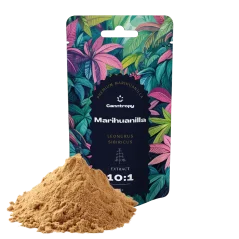

Canntropy Marihuanilla (Leonurus sibiricus) Extract 10:1, 5 g - 100 g

Canntropy Marshmallow (Althaea officinalis) Extract 10:1, 5 g - 100 g
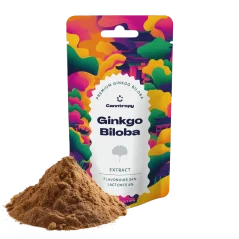

Canntropy Ginkgo Biloba Extract, 24 % flavonoids, 6 % lactones, 5 g - 100 g